
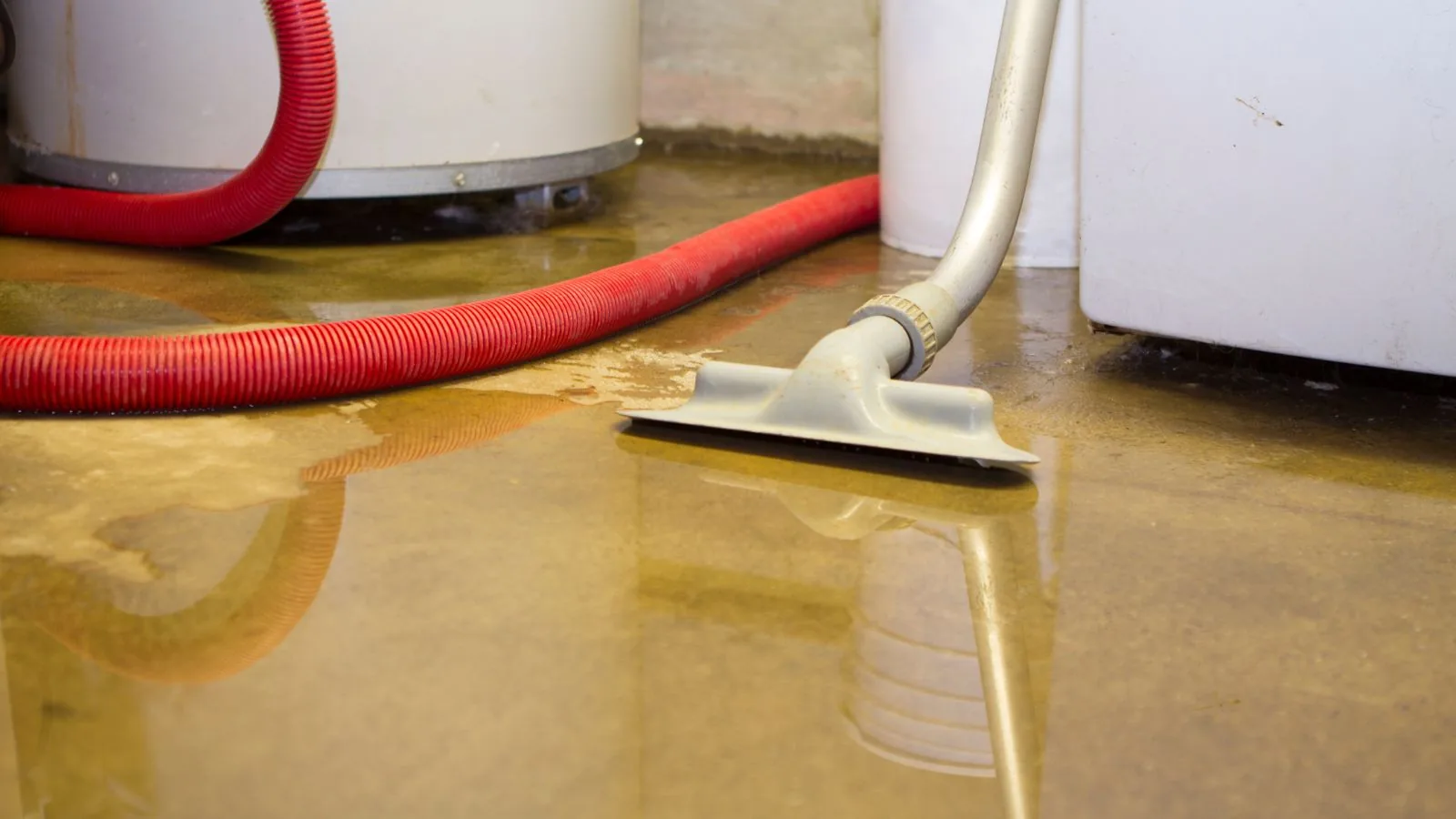
Emergency basement water damage cleanup in Dalton, GA covers water that entered from rain, groundwater, a sump pump failure or a plumbing leak. If water is rising, stay out of the basement, turn off power to it only if you can reach the panel dry and call the 24/7 line.
Basements are dangerous when flooded. Water can cover outlets, the furnace and water heater may be down there, and just a foot of water is heavy against basement walls. Do not go into standing water until power is confirmed off and you know where it came from.
| Source | Typical sign | What helps |
|---|---|---|
| Rain through walls or floor cracks. | Water seeps after storms. | Drying now, drainage work later. |
| Sump pump failure. | Water rising in the pit. | Pump out, then repair or replace the pump. |
| Plumbing leak. | Wet ceiling or pipes. | Shut off the main, then repair. |
| Sewer or floor drain backup. | Dirty water at the drain. | Treat as contaminated, see the sewage page. |
Basement flood emergency: safety first
- Do not enter standing water if the electrical panel, outlets or appliances are in it.
- Call your electric utility or 911 if the panel is wet and you cannot turn off power safely.
- If you have a gas furnace or water heater below, leave if you smell gas.
- Do not try to pump the basement out all at once, because rapid removal can stress walls when the soil outside is still saturated.
- Call the 24/7 line and tell dispatch how deep the water is and what is down there.
Same-day response is offered when available. A crew will plan pumping rates, check power and set up drying.
Why Dalton basements flood
Whitfield County sits in the Valley and Ridge province, with clay soils that drain slowly. Heavy rain, a high water table and poor drainage around the foundation push water against basement walls. Many homes also have grading that slopes toward the house.
Documented flooding in the area gives a sense of the risk. Coahulla Creek near Dalton was above flood stage in the September 2009 floods, and local news has reported flash floods on roads including Cleveland Highway and Willowdale Road. Not every basement flood is a creek flood, though. A clogged gutter or a failing sump pump can be enough.
Water in your Dalton basement? Call the 24/7 line.
☎ Call (762) 763-0011How basements are cleaned and dried
- Standing water is pumped out in stages so the soil and the walls can adjust.
- Mud and debris are removed, and wet drywall, carpet and insulation are taken out.
- Concrete walls and floors are cleaned and checked with moisture meters.
- Dehumidifiers and air movers dry the space, usually with the basement closed from the rest of the house.
- The crew documents readings and photos for your insurer.
Basements dry slowly because they are below grade and cool. The structural drying page explains why dehumidifiers matter more here than in upper floors.
Finished basements
A finished basement has drywall, insulation and flooring that hide water. The bottom of the walls wicks water up, and carpet pad stays wet for a long time. Removing a few inches of drywall at the base and pulling the pad often saves the rest of the wall.
If the water was floodwater, porous materials are removed to a higher line. The flood damage page explains the standards that guide those decisions.
Mold in basements
Basements are the most common place for musty smells and mold. Humidity stays high, air is stagnant and any leftover water feeds growth. If you see spots, smell mustiness or the basement has stayed damp for days, the mold remediation page explains testing and containment.
Before the crew arrives
Stay out of the water
Wait until power is off and the depth is known.
Check the sump
If the pump is running, leave it. If it has failed, tell dispatch.
Move contents upstairs
Only items you can carry safely and that are not in standing water.
Photograph
Take photos of the waterline, the damage and the sump pit.
Prevention after cleanup
- Extend downspouts several feet from the foundation.
- Grade the soil so water slopes away from the house.
- Test the sump pump each season and consider a battery backup.
- Keep a dehumidifier running in the basement through the humid months.
What changes the cost of basement water damage
Basement cleanup depends on depth, water type and how much is finished. Price is explained before work starts.
Want your real number? Call (762) 763-0011 and describe the depth and the finishes.
Insurance and your policy
Basement water coverage depends on the source. A burst pipe or a sudden appliance failure may be covered, while groundwater seepage and flood are usually excluded. Sump pump overflow often needs a separate endorsement.
Georgia guidance says to report promptly and keep damaged property for the adjuster. Photograph the waterline and the sump pit.
What to do first, before help arrives
- Stay out of any room where water touches outlets, cords or a breaker panel, and shut off power at the panel only if you can reach it dry.
- Stop the source if you can, such as the main valve or the appliance supply.
- Move valuables and small furniture out of the wet area, and do not use a household vacuum on standing water.
- Take dated photos before anything is moved, then call the 24/7 line.
Our timing advice follows the EPA guidelines on mold and moisture, which say wet materials should be dried within 24 to 48 hours. Claim steps follow the consumer guidance from the Georgia Office of Insurance and Safety Fire Commissioner.
Questions Dalton homeowners ask
Do you handle basement flooding at night or on weekends in Dalton?
Yes. The line is open 24 hours a day, every day. Stay out of the water and call.
Can I pump the basement out myself?
Small amounts, yes. Large flooding needs staged pumping and safety checks, since power and wall stress are real concerns.
Is the water dangerous?
It can be. Flood water may be contaminated, and electrical hazards are common.
How long does a basement take to dry?
Often several days to a week or more. Meters confirm when it is done.
Do I need to remove drywall?
Wet drywall is usually cut out, at least at the bottom. A meter will show how high the water went.
Will insurance cover this?
It depends on the cause. Flood and groundwater are often excluded. Read your policy and ask your insurer.
Basement pumping and drying covers Dalton ZIP codes 30719, 30720, 30721 and 30722. Tell dispatch the depth of the water and whether the furnace or panel sits below.