
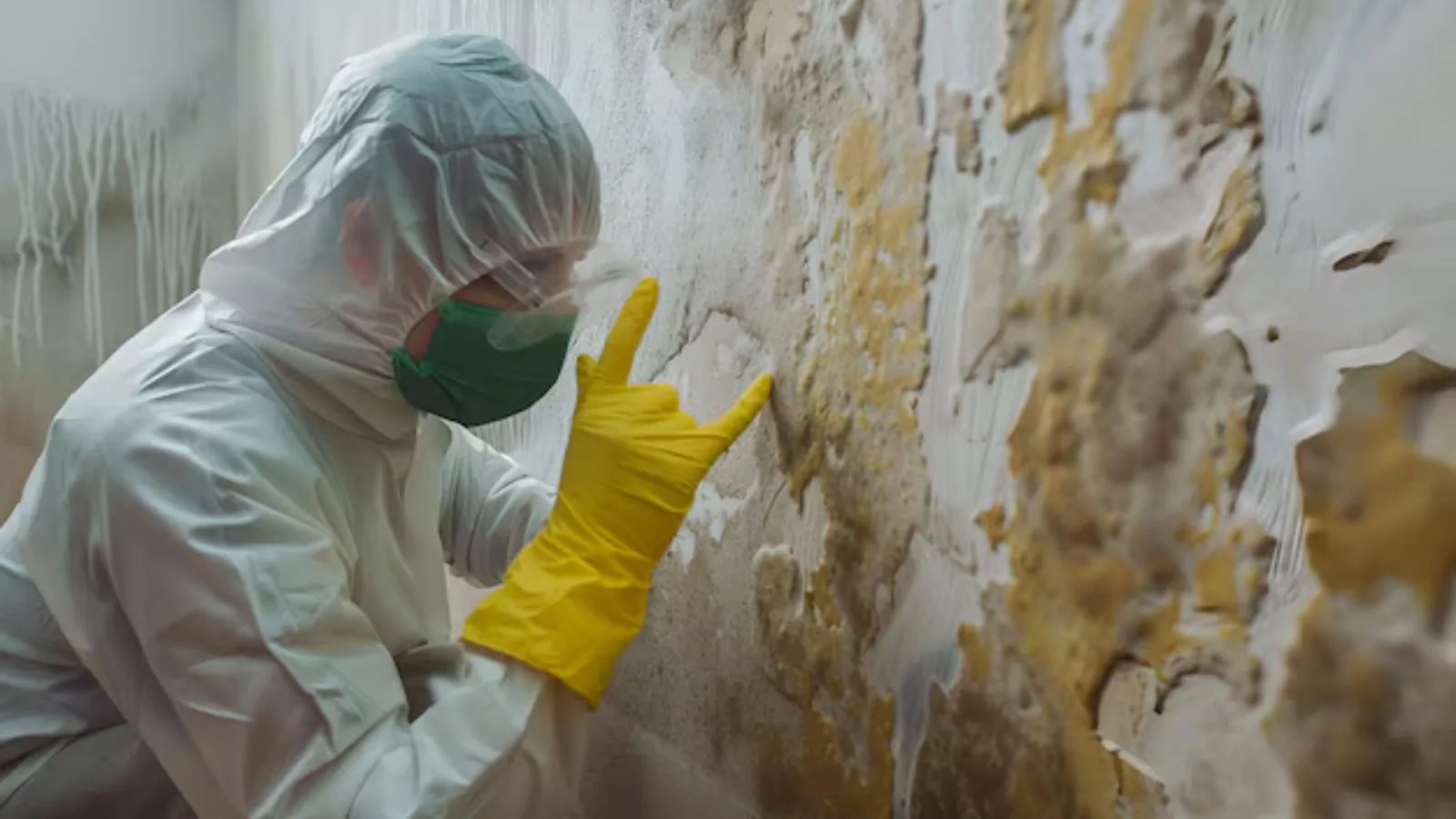
Mold remediation in Dalton, GA follows water damage that was not dried quickly enough, or a slow leak that went unnoticed. If you see spotting on walls or ceilings, smell mustiness or know an area stayed wet for days, call for an inspection.
Mold cannot be fixed until the moisture is. Painting over it or spraying bleach will not solve the problem if the wall is still damp. A remediation plan finds the water source, contains the area, removes contaminated material and dries the structure so growth does not return.
| What you see | What it may mean | Next step |
|---|---|---|
| Small spots on a bathroom ceiling. | Surface growth from humidity. | Fix ventilation and clean the surface. |
| Musty smell with no visible growth. | Hidden moisture in walls or floors. | Moisture mapping and inspection. |
| Dark patches on drywall after a leak. | Growth after water damage. | Containment and remediation. |
| Growth over a large area. | A long-term moisture problem. | Professional assessment and testing. |
Mold after a leak: what to do now
Limit exposure. Stay out of the affected room if you can, keep the door closed and do not disturb the growth. Do not run fans through it, because moving air spreads spores to other rooms. Turn off the HVAC if the system pulls air through the area.
Stop any water source and call. The line is open 24 hours a day, though mold is rarely an emergency in the same way flooding is. If the cause is active water, the crew will treat that first. Health questions about mold exposure belong to a physician.
Why mold grows after water damage
The EPA says that mold can grow on wet materials within 24 to 48 hours. It needs moisture, a food source such as drywall paper or wood and a stable temperature. Dalton is humid for much of the year, so damp materials rarely dry on their own.
Common places in Dalton homes are bathroom ceilings, basements, crawl spaces, closets on exterior walls and the walls near leaking pipes. The crawl space page and the basement page explain how those spaces stay wet.
Mold in your Dalton home? Call to schedule an inspection.
☎ Call (762) 763-0011How remediation works
- An inspector finds the extent of growth and the moisture source, with meters and a camera.
- The area is isolated with plastic barriers and negative air to keep spores contained.
- Contaminated porous materials, such as drywall and insulation, are removed and bagged.
- HEPA vacuums and damp wiping clean the remaining surfaces.
- The structure is dried, and a final inspection or clearance test confirms the result.
The industry guidance is the ANSI/IICRC S520 standard for mold remediation. It describes containment, removal and verification. Ask any company whether its crews follow S520.
Testing and clearance
Air samples and surface samples can show spore counts, but they are a snapshot. A clearance test after remediation compares the work area to outside air or an unaffected room. A third-party tester is often used for a home sale or a loan, so the result is independent.
You do not always need testing before remediation. Visible growth and a moisture source are often enough to plan the work. Testing is useful when the cause is unclear or when a lender or buyer asks for documentation.
What not to do
- Do not paint over mold, because the growth continues underneath.
- Do not use bleach on porous materials like drywall, since it does not reach the roots.
- Do not scrub dry growth without protection, which sends spores into the air.
- Do not seal a damp wall with a vapor barrier.
Related work
Mold usually follows a water loss. If your leak is recent, the structural drying page explains how to prevent growth. For walls and ceilings that show spots, see wall repair and ceiling repair.
Before the inspection
Stay out
Keep the door closed and limit use of the room.
Fix the water
Have a plumber or roofer stop the source.
Turn off the HVAC
If it pulls air from the affected area, switch it off until the crew arrives.
Photograph
Take photos of the growth, the stains and the source.
What changes the cost of mold remediation
Mold remediation is priced by the area affected and the containment needed. Scope and price are explained before work starts.
Want your real number? Call (762) 763-0011 and describe where the growth is.
Insurance and your policy
Many homeowners policies cover mold only when it results from a covered water loss, and some cap mold coverage or exclude it. Long-term leaks and neglect are commonly excluded. Read your policy and ask your insurer.
Document the growth with photos and keep records. Georgia guidance says to report promptly and take reasonable steps to prevent further damage.
What to do first, before help arrives
- Stay out of any room where water touches outlets, cords or a breaker panel, and shut off power at the panel only if you can reach it dry.
- Stop the source if you can, such as the main valve or the appliance supply.
- Move valuables and small furniture out of the wet area, and do not use a household vacuum on standing water.
- Take dated photos before anything is moved, then call the 24/7 line.
Our timing advice follows the EPA guidelines on mold and moisture, which say wet materials should be dried within 24 to 48 hours. Claim steps follow the consumer guidance from the Georgia Office of Insurance and Safety Fire Commissioner.
Questions Dalton homeowners ask
Do you handle mold problems at night or on weekends in Dalton?
Yes. The line is open 24 hours a day, every day. If water is active, call right away so it can be stopped first.
Can I remove mold with bleach?
Not reliably. Bleach does not penetrate porous materials, and the moisture problem remains.
Is black mold more dangerous?
Color alone does not tell you the type or risk. Health concerns belong to a physician, and testing can identify the species.
Do I need a test before remediation?
Not always. Visible growth and a moisture source often settle the plan, and testing is useful when asked for by a lender or buyer.
How long does remediation take?
Small jobs can take a day or two, and larger ones take longer. Drying and clearance add time.
Can anyone promise the mold will not return?
No. Growth returns when moisture returns, so fixing the water source and keeping humidity under control is the best protection.
Mold inspections and remediation cover the Dalton ZIP codes 30719, 30720, 30721 and 30722. Tell dispatch where you see growth and whether a leak came first.