
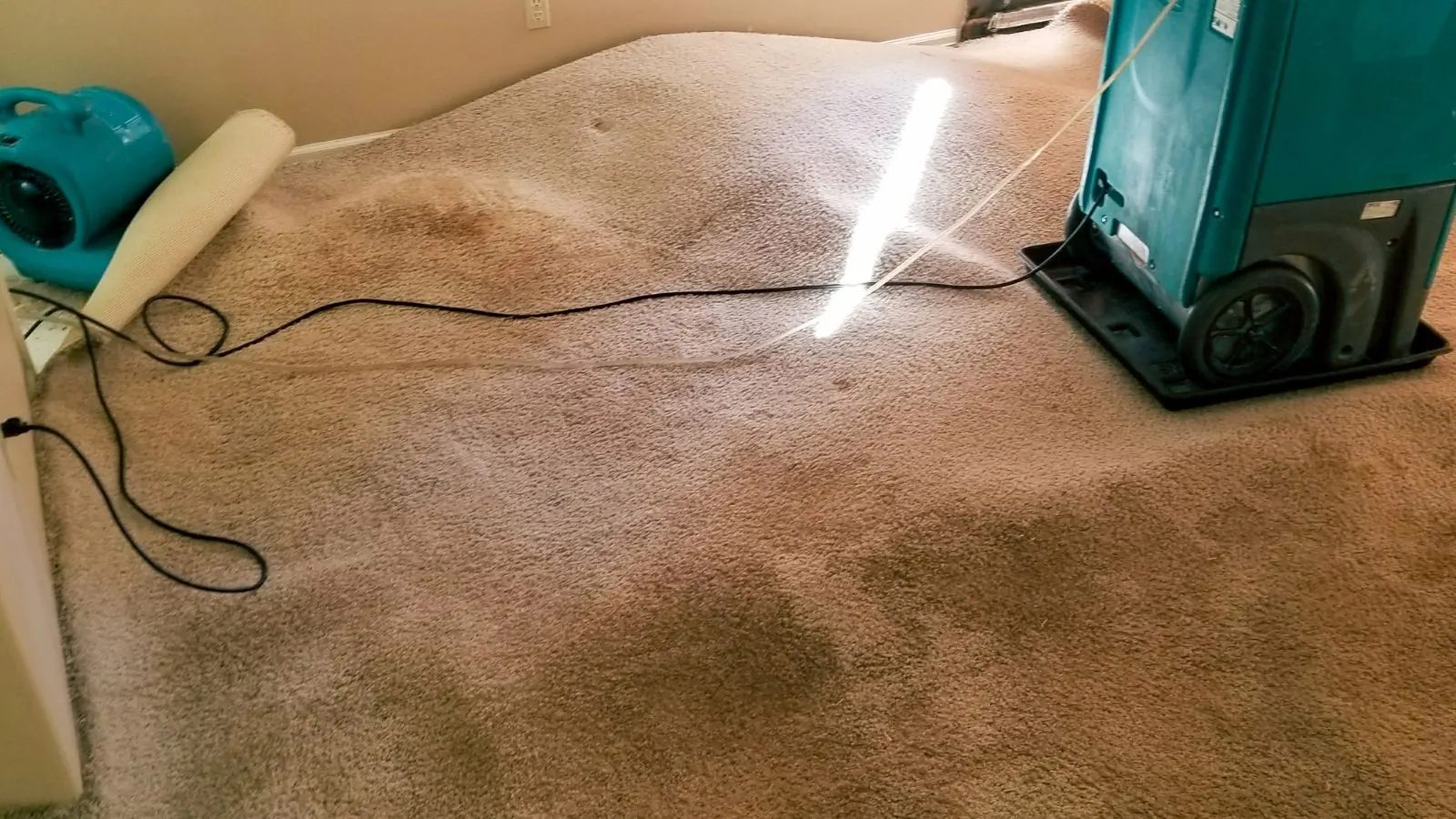
Structural drying and dehumidification in Dalton, GA is the second half of water damage restoration. Extraction removes standing water, but wet framing, subfloors, drywall and concrete still hold moisture that only airflow and dehumidifiers can pull out.
If your home felt wet after a leak, even after the floor looks dry, you are in this stage. Hidden moisture is why a house can smell musty weeks after a pipe break, and why mold can appear in a wall that looked fine on the surface.
| Tool | Job | Where it is used |
|---|---|---|
| Air mover. | Pushes air across wet surfaces to speed evaporation. | Floors, wall bottoms and open cavities. |
| Dehumidifier. | Removes moisture from the air so surfaces keep releasing water. | Whole rooms and sealed work areas. |
| Floor drying mat. | Pulls moisture from hardwood without removing it. | Wood floors with cupping risk. |
| Moisture meter and thermal camera. | Find wet material and confirm dry readings. | Every stage of the job. |
Why drying takes days, not hours
Wet materials release moisture slowly. Water moves from the wetter material into the air, and the air must be taken away and dehumidified or it just carries the moisture to other surfaces. This is why drying uses a closed system, with air movers circulating and dehumidifiers pulling water out.
The EPA says drying wet materials within 24 to 48 hours helps prevent mold growth. Starting the process early matters more than any single tool. Same-day response is offered when available, and the line is open 24 hours a day.
The science: evaporation, air and drying goals
Restoration drying follows the principles in the ANSI/IICRC S500 standard. A crew sets a drying goal for each material, takes baseline readings in a dry part of the house and tracks progress each day. When the wet areas reach the goal, equipment comes out.
Class 1 through 4 describe how much water a material has absorbed and how fast it releases it. A small spill on a thin surface is a low class. Water in thick materials such as hardwood, plaster and concrete is a high class and takes longer. The class affects how many pieces of equipment go in the room.
Floors or walls still damp after a leak in Dalton? Call for a moisture reading.
☎ Call (762) 763-0011How a drying job runs
- Moisture mapping with a meter and thermal camera finds the wet areas, including behind walls.
- Equipment is placed to move air across wet surfaces and into cavities through small openings.
- Dehumidifiers run with doors and windows closed so the room dries as a unit.
- Technicians return, read the meters, adjust equipment and record the numbers.
- When readings reach the goal, equipment is removed and a final log is written.
The log is your proof. Insurers often ask for it, and it shows that drying was measured and not guessed. Ask any company you hire for daily readings.
Drying in Dalton homes
Dalton is humid for much of the year. When outdoor air is humid, opening windows slows drying, and dehumidifiers do the work. Homes with a slab foundation hold moisture in the concrete, while homes over a crawl space can have wet joists and insulation, as the crawl space page describes.
Carpet is a large part of the local building stock, and the pad beneath it holds a lot of water. Pad is usually removed and replaced, and the carpet may be dried in place. The carpet water damage page explains the decision.
What can be dried in place and what comes out
| Material | Dried in place? | Notes |
|---|---|---|
| Concrete slab. | Yes. | Slow, so dehumidifiers run for days. |
| Solid wood framing. | Yes. | Meter readings confirm the goal. |
| Drywall. | Sometimes. | Saturated or sagging sections come out. |
| Insulation. | Rarely. | Wet batts hold water against framing. |
| Carpet pad. | No. | Usually removed. |
| Hardwood. | Sometimes. | Drying mats and early action help, see the hardwood page. |
What to do while equipment is running
Keep doors closed
The system works best when the drying area is sealed from the rest of the house.
Leave equipment alone
Do not move or unplug units. Call if one stops or makes a noise.
Expect noise and heat
Dehumidifiers produce warmth, and the house may feel dry. That is the equipment doing its job.
Keep a log
Note dates, visits and any changes you see in walls or floors.
When drying is not enough
If a material stayed wet for several days, mold may have started. The crew will tell you if readings or smells suggest it, and the mold remediation page explains what comes next.
What changes the cost of structural drying
Drying is billed by equipment and time, and the plan follows moisture readings. Scope and price are explained before work starts.
Want your real number? Call (762) 763-0011 and describe what got wet.
Insurance and your policy
Drying costs are often part of a water damage claim when the cause is covered. Insurers commonly want the moisture log and daily readings, so ask for them as the job goes on.
Georgia guidance says to report promptly and keep records of what you spend. Keep your drying log with your photos and receipts.
What to do first, before help arrives
- Stay out of any room where water touches outlets, cords or a breaker panel, and shut off power at the panel only if you can reach it dry.
- Stop the source if you can, such as the main valve or the appliance supply.
- Move valuables and small furniture out of the wet area, and do not use a household vacuum on standing water.
- Take dated photos before anything is moved, then call the 24/7 line.
Our timing advice follows the EPA guidelines on mold and moisture, which say wet materials should be dried within 24 to 48 hours. Claim steps follow the consumer guidance from the Georgia Office of Insurance and Safety Fire Commissioner.
Questions Dalton homeowners ask
Do you handle drying emergencies at night or on weekends in Dalton?
Yes. The line is open 24 hours a day, every day. Starting early lowers the chance of mold.
Why not just run box fans and open windows?
Fans move air but do not remove moisture, and humid outdoor air can add moisture. Dehumidifiers and meters are what finish the job.
How long does structural drying take?
Many jobs run three to five days, but concrete and thick wood can take longer. Meter readings decide.
Will the equipment raise my electric bill?
Yes, because air movers and dehumidifiers draw power. Ask your insurer whether the extra cost can be included in the claim.
Do walls have to be opened?
Small openings or removed baseboards usually let air reach the cavity. Saturated drywall may need to come out.
How do I know the building is dry?
Meter readings in the affected materials match your drying goal, which is based on readings in unaffected areas of the house.
Drying visits cover Dalton ZIP codes 30719, 30720, 30721 and 30722, with daily returns until the readings are normal. Ask the crew for the log each day.