
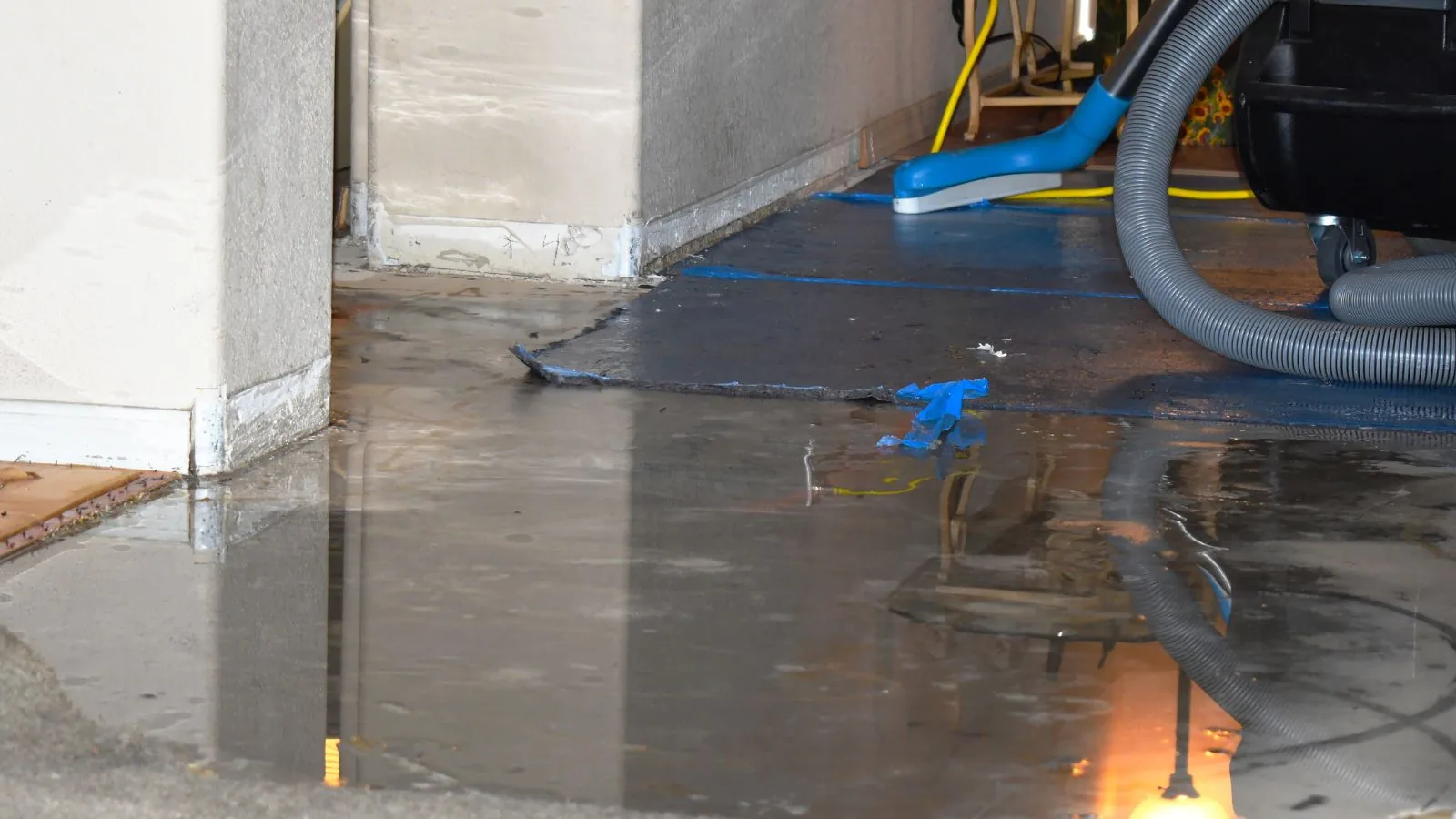
Emergency water extraction in Dalton, GA means getting standing water out of the building with pumps and extraction units before it soaks into the structure. If water is covering your floor right now, call the 24/7 line, then use the steps below while you wait for a crew.
Stop the source if you can and shut off the main water valve. Turn off power to wet areas only if you can reach the panel without standing in water, then lift valuables, pull up rugs and keep children and pets out of the room. If water is touching outlets, a plugged-in appliance or the electrical panel, stay out and call your electric provider or 911 before you call anyone else.
| Situation | What it usually needs | First move |
|---|---|---|
| An inch or two over one room. | A light submersible pump or wet vacuum, then drying equipment. | Shut off the source and lift contents off the floor. |
| Several inches, or a flooded lower level. | A trash pump or truck-mounted unit, with staged removal. | Stay out if the water reaches outlets or the panel. |
| Water is gone but the floor still feels wet. | Extraction from carpet and pad, then air movers and dehumidifiers. | Keep windows closed if the outdoor air is humid. |
| Water that looks dirty or smells like sewage. | Contamination handling first, then extraction. | Keep people and pets out of the water. |
When standing water is an emergency
Water is heavy and it never stays where it lands. One inch of water over 1,000 square feet of floor is roughly 620 gallons, and that load heads for the lowest point it can find. On a slab it creeps under baseboards. On a wood-framed floor it drops through gaps into the space below.
Time matters because wet building materials start to hold moisture within hours. The EPA says that drying wet materials within 24 to 48 hours helps prevent mold growth, which is why extraction is the first job and not an afterthought. Our dispatch line is open 24 hours a day, so a pipe that fails at 2 a.m. gets the same response as one that fails at noon.
Same-day response is offered when available, and crews can work after hours when the loss calls for it. Dispatch will ask where the water came from, how deep it is and whether anything electrical is wet, because those three answers decide which pumps go on the truck.
How water extraction is done
The tool matches the depth. Submersible pumps handle several inches of water in a basement or utility room. A trash pump moves water that carries grit or debris. For carpet and pad, a truck-mounted or portable extraction unit pulls water out through a wand, which gets far more out than a wet vacuum can.
- Squeegee wands and wet vacuums clear hard floors, tile and corners where pumps cannot reach.
- Extraction units pull water from carpet and cushion before the pad is judged for removal.
- Moisture meters read wood, drywall and concrete so the crew knows where water went beyond what you can see.
- A thermal camera shows cool, wet areas behind walls and under floors so the first drying plan covers the real footprint.
Once the bulk water is gone, the job changes from removal to drying. That second stage is covered in structural drying, and it is where most of the time and equipment go.
Water on the floor in Dalton? Call the 24/7 line and describe what you see.
☎ Call (762) 763-0011Extraction in Dalton homes and buildings
Whitfield County has a record of fast-rising water after heavy rain. Local news coverage of past flash floods has named Cleveland Highway, Willowdale Road, Coronet Drive and the Mill Creek area. Water that enters a home from rain runoff or a creek is groundwater, and restoration crews treat it as contaminated until it is tested, so the extraction plan includes protective gear and careful disposal.
If the water came from a supply line inside the house, it starts cleaner, but it does not stay that way. After about two days, standing water in a closed room picks up bacteria from the materials it touches. If you are not sure where the water came from, say so when you call and dispatch will plan for the worse case.
Dalton is known as the Carpet Capital of the World, and carpet over pad is common in homes everywhere. Pad acts like a sponge. In a lot of cases the pad has to be removed and replaced even when the carpet itself can be saved, which is covered on the carpet water damage page.
Extraction and drying are two different jobs
Pumping stops the flooding but it does not dry anything. A floor can look clear and still hold water in the subfloor, the bottom of the drywall and the pad. Air movers and dehumidifiers pull that moisture out over the following days, and a moisture meter confirms when the readings are back to normal.
A company that extracts and leaves is stopping halfway. Ask whoever you hire how many days of drying they plan, what readings they will take and when they will take them. A written plan with those numbers is a good sign, and one that avoids the question is not.
Before the crew arrives
Stop the source
Close the main water valve or the fixture shutoff. If the water is rain or creek runoff, move to the next card.
Power and safety
Turn off power to wet areas only if the panel is dry and you can reach it safely. Otherwise call the utility or 911.
Protect belongings
Lift electronics, paper and small furniture onto counters. Pull rugs and leave heavy furniture for the crew.
Document the loss
Take photos and a short video of the water line on walls and the items touched, before anything is moved.
After the water is out
Expect baseboards to come off so walls can dry from the inside. Saturated carpet pad and soft insulation are usually removed because they hold water for too long. Hardwood and laminate need their own plan, and the hardwood floor page explains when boards can be saved.
If any part of the building stayed wet past the first two days, ask for a moisture reading before walls are closed. Mold needs moisture to grow, and the mold remediation page explains what happens when it has already started.
What changes the cost of water extraction
Extraction is one part of the bill. Dispatch asks a few questions on the call so scope and price are explained before work starts, and the written scope follows what the crew actually finds on site.
Want your real number? Call (762) 763-0011 and describe the room, the depth and where the water came from.
Insurance and your policy
Homeowners policies usually respond to sudden and accidental water, such as a supply line that fails. They often do not respond to slow leaks or neglected maintenance, and rising flood water is usually excluded and needs separate flood coverage. Read your policy or ask your insurer which applies.
The Georgia Office of Insurance and Safety Fire Commissioner advises policyholders to report a claim promptly, make reasonable repairs to prevent more damage and keep damaged property until the adjuster has seen it. Photos, a moisture log and receipts for emergency work all help your file.
What to do first, before help arrives
- Stay out of any room where water touches outlets, cords or a breaker panel, and shut off power at the panel only if you can reach it dry.
- Stop the source if you can, such as the main valve or the appliance supply.
- Move valuables and small furniture out of the wet area, and do not use a household vacuum on standing water.
- Take dated photos before anything is moved, then call the 24/7 line.
Our timing advice follows the EPA guidelines on mold and moisture, which say wet materials should be dried within 24 to 48 hours. Claim steps follow the consumer guidance from the Georgia Office of Insurance and Safety Fire Commissioner.
Questions Dalton homeowners ask
Do you handle water extraction emergencies at night or on weekends in Dalton?
Yes. The dispatch line is open 24 hours a day, every day, and after-hours extraction is part of the service. Tell dispatch what you see, and they will say what to do while the crew is on the way.
Is a wet vacuum enough to remove standing water?
For a spill on a hard floor, yes. For carpet, pad or more than an inch or two of water, a wet vacuum leaves most of the water behind. Extraction units pull water out of carpet and cushion, and pumps clear depth.
Should I pull up the carpet myself?
Leave it unless the water is clean and you know how to lift it without damaging the tack strips. Lifting too early can tear carpet that could have been saved. Crews decide that after reading the moisture and the category.
How soon does mold become a risk after a flood?
The EPA recommends drying wet materials within 24 to 48 hours to prevent mold growth. If more time has passed, the mold page explains what testing and containment look like.
Can I stay in the house during extraction?
Often yes for a small clean-water loss. For flooding, contaminated water or a loss near the electrical panel, leave the affected rooms and let the crew set up first.
What if the water came from a neighbor or the unit above me?
Document it with photos, tell your landlord or property manager, and call. Crews can extract and dry while the responsibility question is sorted out separately.
Water extraction crews work in every Dalton ZIP code, including 30719, 30720, 30721 and 30722, and in the nearby towns listed on the service area page. Give dispatch your street and the crew plans the pumps from there.