
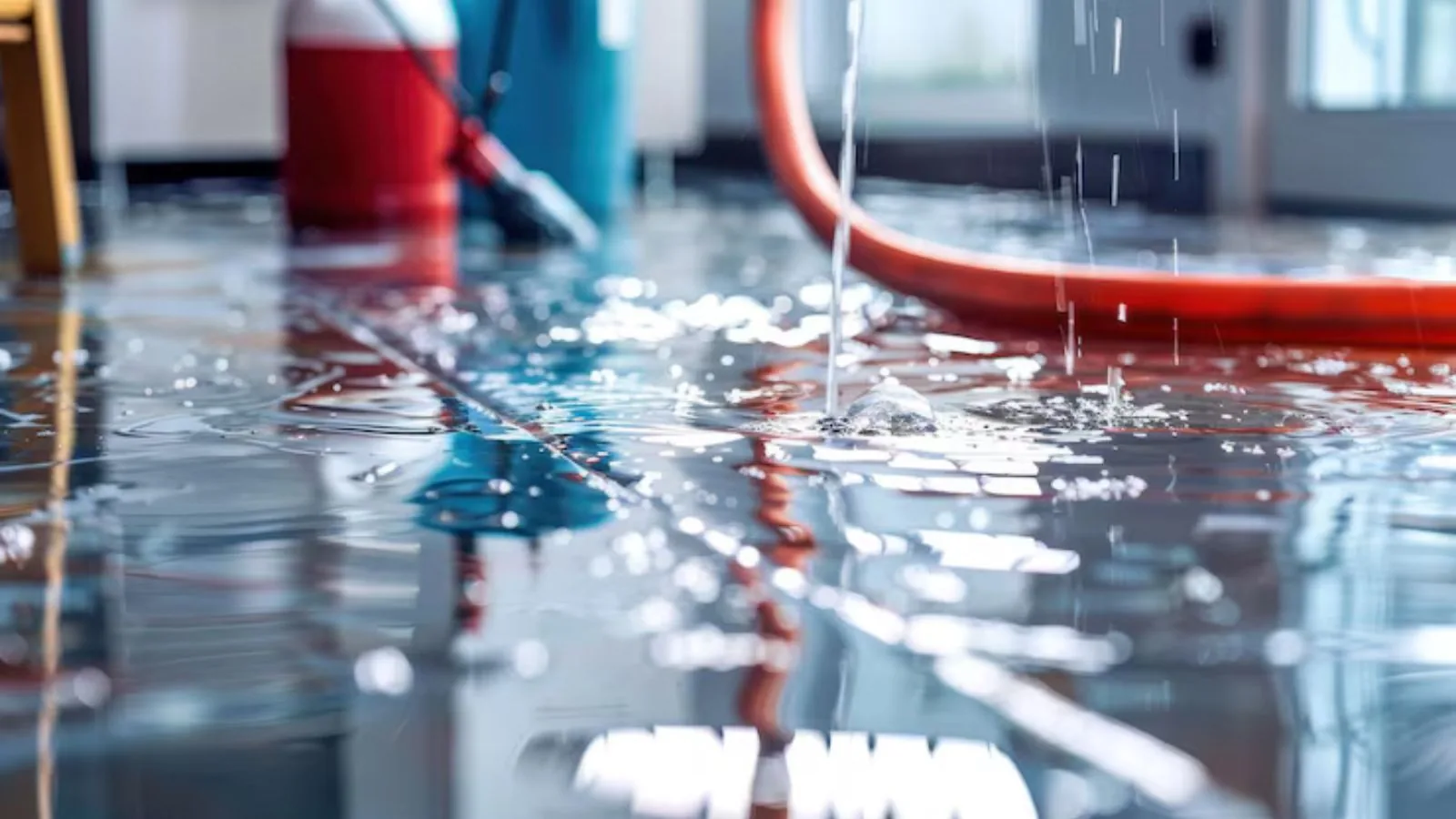
Emergency flood damage cleanup in Dalton, GA deals with water that came from outside the plumbing, such as river overflow, creek rise, runoff or groundwater. If flood water is in your home now, get everyone out of the water, stay away from outlets and appliances, and call the 24/7 line.
Flood water should be treated as contaminated. Do not wade through it without boots and gloves, do not run electronics that sat in it and do not use household appliances until a qualified person has checked them. If the panel or gas lines are involved, call 911 or your utility before you call us.
| Source | Water category | What changes |
|---|---|---|
| A supply line that failed inside the house. | Starts as clean water and degrades over time. | Standard extraction and drying. |
| Rain runoff, creek overflow or groundwater. | Treated as contaminated. | Protective gear, careful disposal and porous materials removed. |
| A sewer or drain that backed up. | Highly contaminated. | Separate sewage cleanup, see the sewage page. |
| Water that sat for days. | Degrades by contact and time. | Extra removal of materials that cannot be cleaned. |
When flood water is an emergency
Flood water is an emergency because it is dirty, it moves fast and it leaves silt behind. The water can carry soil, bacteria and chemicals from roads and yards, and it can soak porous materials so thoroughly that they cannot be cleaned.
Call right away so crews can start extraction while the water is still draining out. The line is open 24 hours a day, so it does not matter when the water arrives. Same-day response is offered when available, though a widespread storm can mean the line is busy, and dispatch will tell you where you stand.
Flooding in Whitfield County
Whitfield County has a documented history of storm flooding. The National Weather Service recorded Coahulla Creek at Keiths Mill near Dalton above its 16 foot flood stage during the September 2009 floods, with readings over 20 feet. FEMA lists flooding in its declared disasters for the area in 2009 and 2011.
In more recent years, local news has reported flash flooding that closed roads including Cleveland Highway, Willowdale Road, Coronet Drive and areas near Mill Creek. Those are useful names to remember, but a home does not need to be near a named stream to flood. Poor drainage, a blocked storm drain or a low spot can send water into a house after a heavy storm.
Ask your city or county about your property. The FEMA Flood Map Service Center shows mapped flood zones by address, and the federal flood program lists Dalton and Cohutta as participating communities. Check the map, and ask about flood coverage before storm season rather than after.
Flood water in your Dalton home? Call the 24/7 dispatch line.
☎ Call (762) 763-0011How flood cleanup is done
- Safety check: electricity, gas and structural concerns come first.
- Water and mud are removed with pumps, extractors and shovels where silt has settled.
- Contaminated porous materials, such as carpet, pad, insulation and wet drywall, are removed rather than dried.
- Surfaces that stay are cleaned and treated, then dried with air movers and dehumidifiers.
- Moisture readings confirm the structure is dry before rebuilding starts.
The rule behind the removal step is straightforward. The industry standard for water damage, ANSI/IICRC S500, treats flood water as heavily contaminated, and porous materials soaked in it are normally removed. Ask any company you hire whether their crews work to that standard.
What to save and what to throw out
| Item | Usually | Why |
|---|---|---|
| Carpet and pad. | Remove. | They absorb contaminated water and are hard to disinfect. |
| Drywall and insulation. | Remove the wet sections. | They wick water upward and hold it. |
| Solid wood furniture. | Often can be cleaned and dried. | Dense material that tolerates a careful drying plan. |
| Upholstered furniture and mattresses. | Often discarded. | Fabric holds contamination deep inside. |
| Electronics and appliances. | Do not power on. | Have them checked before use. |
Keep photos of everything before you move it. Your insurer may want to see items before they are thrown away, and the Georgia insurance commissioner says to keep damaged property until the adjuster has examined it.
While the water is still in the house
Get out of the water
Wet floors and standing water can hide a live circuit. Do not touch outlets or appliances.
Photograph before cleanup
Take pictures of the water line on walls and furniture. The line shows how deep the water got.
Protect what you can
Lift documents, medications and small valuables to a high shelf, if it is safe to enter.
Call for pumping
Dispatch will ask about depth and electrical risk so the right pumps are on the truck.
Related jobs after flooding
Flood loss rarely stops at the floor. Water that rises past the baseboards soaks drywall, and a basement that fills usually needs basement cleanup as a separate plan. If the water also came through the roof or a window, storm damage work covers the envelope side of the loss.
What changes the cost of flood damage cleanup
Flood cleanup is priced by what the water touched and how long it stayed. A crew confirms the scope on site, and scope and price are explained before work starts.
Want your real number? Call (762) 763-0011 and describe the depth and the rooms affected.
Insurance and your policy
Flood damage is usually excluded from standard homeowners policies. The Georgia Office of Insurance and Safety Fire Commissioner says loss caused by flood is not covered under a homeowners policy, and flood insurance is a separate product. Ask your insurer or agent what you have, and ask whether your community participates in the federal flood program.
If you do have flood coverage, report the claim promptly and document the damage. Keep damaged property until the adjuster has seen it.
What to do first, before help arrives
- Stay out of any room where water touches outlets, cords or a breaker panel, and shut off power at the panel only if you can reach it dry.
- Stop the source if you can, such as the main valve or the appliance supply.
- Move valuables and small furniture out of the wet area, and do not use a household vacuum on standing water.
- Take dated photos before anything is moved, then call the 24/7 line.
Our timing advice follows the EPA guidelines on mold and moisture, which say wet materials should be dried within 24 to 48 hours. Claim steps follow the consumer guidance from the Georgia Office of Insurance and Safety Fire Commissioner.
Questions Dalton homeowners ask
Do you handle flood emergencies at night or on weekends in Dalton?
Yes. The line is open 24 hours a day, every day. After a major storm the line can be busy, so tell dispatch about depth, power and whether anyone is at risk.
Is flood water in a home dangerous to touch?
It can carry bacteria and chemicals, so wear boots and gloves, avoid skin contact and wash well afterward. Health questions belong to a physician.
Does homeowners insurance cover flooding?
Usually not. Flood is commonly excluded and needs a separate policy. Check your policy, and ask your insurer if you are unsure.
Can I dry out a flooded house with fans and open windows?
Not safely, in most cases. Contaminated materials need removal first, and humid outdoor air can slow drying. Meter readings should guide the plan.
Which towns do you cover for flood cleanup?
Dalton plus nearby Rocky Face, Tunnel Hill, Varnell, Cohutta and Chatsworth.
How do I know if my property is in a flood zone?
Use the FEMA Flood Map Service Center and search by address. Your city or county floodplain office can also answer questions.
Flood cleanup is available across Dalton ZIP codes 30719, 30720, 30721 and 30722, and in towns such as Varnell and Cohutta along the same corridors. Describe the depth, the rooms and any electrical risk when you call.
Creek water is contaminated water, and the crew treats it that way. Homeowners near Tar Creek can read the local context on the Brookwood page.