
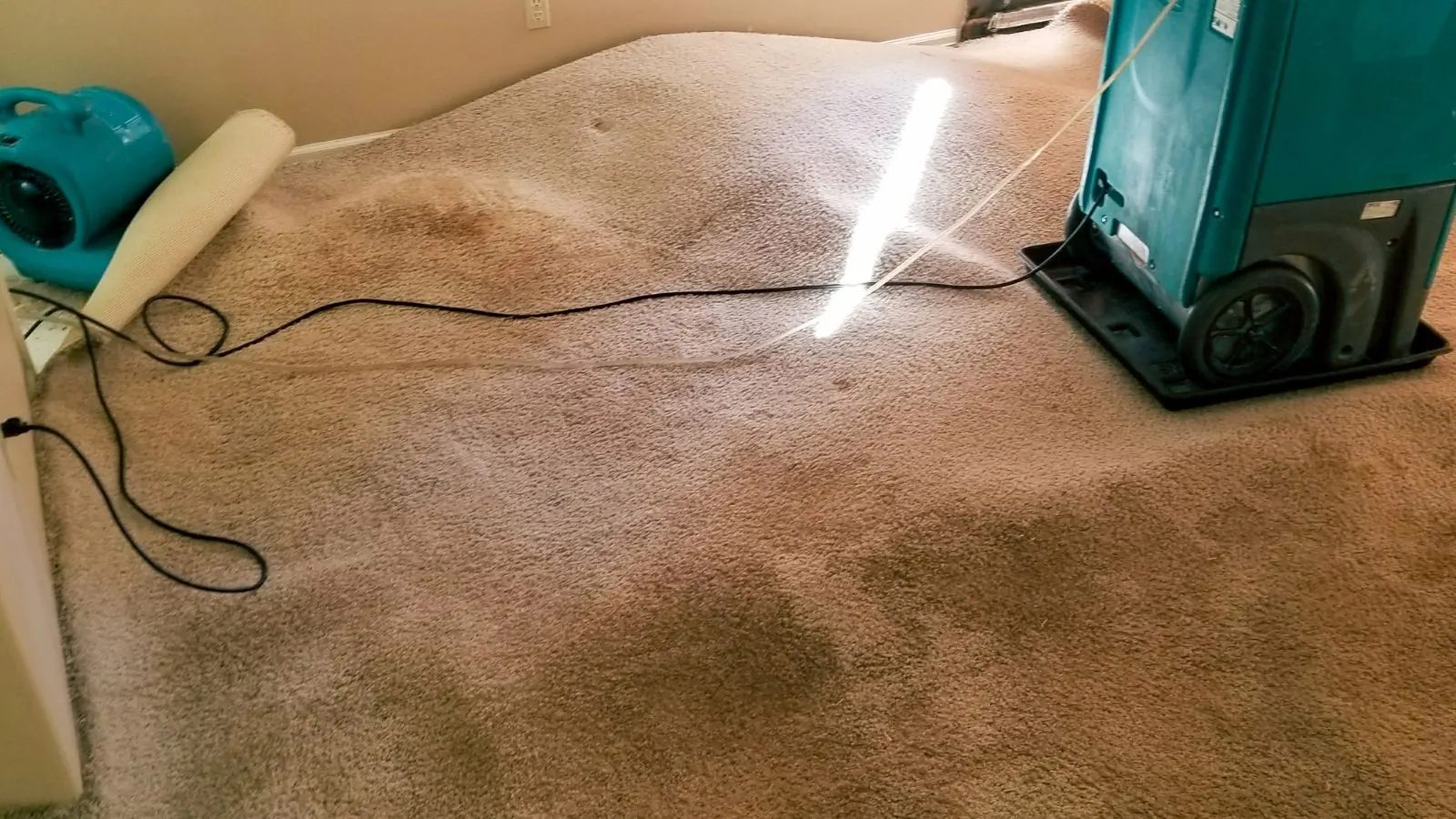
Many people expect a wet room to dry in a day. In reality, how long water damage takes to dry in Dalton depends on the materials, the amount of water and the weather. A simple carpet job may take three days, and a concrete slab or a hardwood floor can take much longer.
This guide explains the stages, what slows drying and how to know when it is finished. The answer comes from meter readings, not from a calendar.
The four stages of drying
- Extraction removes standing water. This takes hours.
- Equipment goes in. Air movers and dehumidifiers run.
- Daily checks track moisture and adjust the setup. This stage takes days.
- Final readings confirm the building has reached its drying goal.
The extraction stage is fast and visible. The drying stage is slow and mostly invisible, because the water is inside walls, subfloors and concrete. The structural drying page explains the equipment.
Typical timelines by material
| Material | Typical range | What changes it |
|---|---|---|
| Carpet, with the pad removed. | Two to four days. | Humidity and airflow. |
| Drywall that can be dried in place. | Three to five days. | Wall cavity access. |
| Wood framing. | Three days to a week or more. | Thickness and openness. |
| Hardwood flooring with mats. | One to three weeks. | Species, finish and moisture. |
| Concrete slab. | Several days to weeks. | Thickness and sealing. |
| Plaster walls. | A week or more. | Thickness and age. |
These are rough ranges, not promises. A crew reads actual moisture and adjusts. Water category, depth and how quickly drying began all change the result.
Wondering whether your building is dry? Call for a moisture reading.
☎ Call (762) 763-0011What slows drying down
- Humid outdoor air that adds moisture to the room.
- Thick or dense materials such as hardwood, plaster and concrete.
- Closed wall cavities that do not get air.
- Wet insulation that holds water against framing.
- Cool temperatures, which slow evaporation.
- Late starts, since water soaks deeper the longer it sits.
The EPA recommends drying wet materials within 24 to 48 hours to prevent mold. That window is a target for starting, not for finishing.
Dalton weather and drying
Dalton summers are humid, and a dehumidifier in a closed room does more than open windows. In winter the air is drier, but cold surfaces slow evaporation, so heat in the house helps. Spring storms bring wet air back, and a job that began in sun can slow in rain.
Basements and crawl spaces are cool and damp for much of the year, so they usually take longer than upstairs rooms. The basement page and the crawl space page describe why. After the heavy rain on Greater Dalton in 2025, a lot of drying ran through humid summer weather.
How you know it is dry
A crew sets drying goals by taking readings in unaffected parts of the same building. When the wet materials reach those numbers, they are dry. Readings are logged each day, and the final set closes the job.
Ask to see the readings. A moisture meter gives a number for each material. A thermal camera can show cool areas that remain wet. If a crew cannot show you numbers, ask why.
What you can do to help
- Keep doors and windows closed while equipment runs.
- Leave air movers and dehumidifiers where they are.
- Empty the dehumidifier tank if it does not drain, and tell the crew.
- Report new smells, stains or sounds.
- Keep your own log with dates and photos.
A crew may need access to rooms you rarely use. Having a key or a lockbox plan helps if you work during the day. For burst pipes, the burst pipe page shows a typical sequence.
Drying by room type
| Room | What makes it slow or fast | What the crew watches |
|---|---|---|
| Bathroom. | Tile and cabinets dry slowly behind surfaces. | Wall bottoms and the cabinet base. |
| Kitchen. | Cabinets box in the floor edge. | Toe-kicks and the subfloor. |
| Bedroom with carpet. | Carpet dries fast once the pad is out. | Tack strips and baseboards. |
| Basement. | Cool concrete and little airflow. | Wall bottoms and floor slab readings. |
| Attic or ceiling. | Insulation holds water above drywall. | Joists and drywall backs. |
A kitchen can take longer than a living room even if the wet area is smaller, because cabinets trap moisture. A bedroom with only carpet is often among the fastest jobs, provided the pad is removed early.
Ask the crew to explain which rooms they expect to finish first. Staged drying lets some rooms return to use while others continue, and it makes the schedule easier to plan around.
Why dry is not the same as looks dry
A floor can feel dry to the hand and still read wet to a meter. Water can sit inside wood, behind baseboards and under tile. Surface dryness comes first, and material dryness comes later.
The EPA says to dry water-damaged areas within 24 to 48 hours to prevent mold. A building that looks dry after two days may still hold moisture inside. That is why the final readings, not your eyes, decide. The hardwood page shows a case where looks can be misleading.
If you notice a musty smell a week after a leak, ask for a reading. Lingering odor often means that some material never reached its goal.
When drying takes longer than planned
If readings do not drop, the crew looks for hidden water. A slow leak, a wet cavity or a source that was not fully stopped can reset the clock. The plan is adjusted, equipment may be moved and openings may be added.
Extended drying is not a failure. It is part of doing the job to a measured standard. A company that rushes to finish before readings are normal leaves you with mold risk later.
What to do first
- Find and stop the moisture source before anything else.
- Do not use a household vacuum or fan to chase wet or moldy spots, because that spreads material through the home.
- Take dated photos of anything affected and keep them with your records.
For drying timing, the EPA guidelines on mold and moisture say wet materials should be dried within 24 to 48 hours. For claims, the Georgia Office of Insurance and Safety Fire Commissioner publishes plain-language consumer guidelines.
Questions readers ask
How long does water damage take to dry in a house?
Many jobs take three to five days with equipment, and thick materials can take longer. Meter readings decide when it is done.
Can I speed up drying with fans alone?
Fans help surfaces but cannot dry a wet cavity. Dehumidifiers and meter readings finish the job.
Why do crews return each day?
They read moisture, move equipment and adjust the setup. Drying is a measured process.
Does humidity in Dalton matter?
Yes. Humid air slows drying, so dehumidifiers matter more than open windows.
Can mold grow while the building is drying?
It can if materials stay wet beyond the first day or two. The EPA window is 24 to 48 hours.
When can the walls be closed?
After readings reach the goal. Closing wet walls traps moisture.