
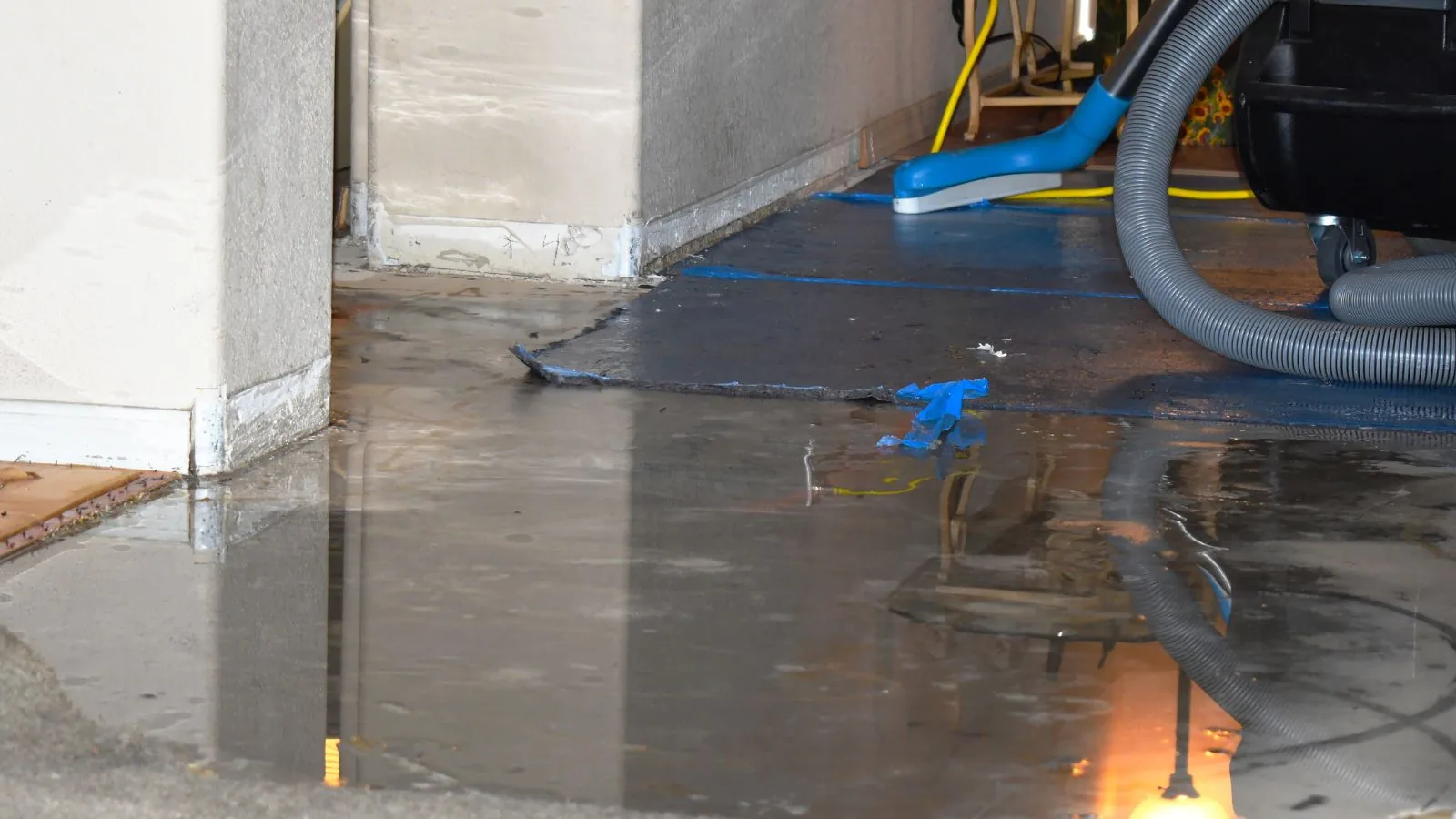
Asking how much water damage restoration costs in Dalton is fair, and the honest answer is that it depends. Two houses with the same leak can have very different bills if one has a slab and tile and the other has carpet over a wood subfloor. The same is true of a fast response versus a delayed one.
This guide does not quote dollar figures, because any number without a site visit is a guess. It does show the factors that move the price, how a written scope should look and how to compare estimates without being misled.
The main factors that set the price
| Factor | Why it matters | How to check |
|---|---|---|
| Water category. | Clean water is simpler than contaminated water. | Ask what category the crew assigns and why. |
| Area and depth. | More square footage needs more equipment and labor. | Ask for rooms and square feet in the scope. |
| Materials. | Carpet, wood, plaster and drywall dry or fail differently. | Ask which will be saved and which removed. |
| Time since the loss. | Water soaks deeper the longer it sits. | Start as soon as the source is stopped. |
| Equipment days. | Dryers and dehumidifiers are billed by time. | Ask how readings decide the end. |
| Access and hours. | Tight spaces and after-hours work change labor. | Ask whether the scope includes them. |
None of these can be judged by phone alone. A good company asks questions on the call, visits the site and writes a scope that explains the choices.
Extraction, drying and rebuilding are different bills
Water damage jobs usually have three parts. Emergency services stop the damage by removing water and drying the structure. Repairs fix what the water destroyed, such as drywall, flooring and cabinets. Contents work covers belongings that are cleaned or removed.
Some companies bundle these and some separate them. Ask which parts your quote covers, and which parts you will need to buy elsewhere. A low price for emergency work with a large rebuild afterward can end up costing the same as a bundled offer.
Want a scope for your own house? Call the 24/7 line and describe the loss.
☎ Call (762) 763-0011What a good scope looks like
- Rooms, square footage and affected materials.
- Water category and how it was determined.
- Equipment list with counts and expected days.
- What will be removed, what will be dried and what will be cleaned.
- How moisture readings will be shared with you and your insurer.
- What is not included.
If your insurer is involved, an itemized scope also helps the adjuster. The Georgia insurance commissioner's office notes that if a contractor's bid is substantially higher than the insurer's estimate, the insurer may ask for a detailed, itemized estimate.
Dalton: local reasons costs differ
Dalton homes vary a lot. Some are slab houses with carpet and tile. Others are older houses with wood floors and plaster, and some have crawl spaces or basements. Each type dries differently, and each gets a different plan.
Storm weeks can raise demand for crews, and the number of jobs the same crew can handle in a day goes down. After the 2025 downpour that dropped 6.71 inches on Greater Dalton, flooding was reported on several roads and crews were busy. Ask a company how it schedules during storm weeks.
Houses in Chatsworth and Cohutta are some distance from Dalton, and travel can affect scheduling. Ask whether it changes the scope.
Red flags in a quote
- A single lump sum with no detail.
- A price quoted with no site visit for anything beyond a small spill.
- Pressure to sign before you can call your insurer.
- No mention of moisture readings.
- A scope that skips drying and goes straight to rebuilding.
How insurance changes the picture
If the loss is covered, the insurer pays according to the policy, and your deductible comes first. The insurer's estimate is based on local labor and material prices. Ask your contractor to explain differences in writing.
If the loss is not covered, ask for a phased scope so you can prioritize. The extraction page explains why the first stage matters most for limiting the final cost.
Three sample situations, described in words
| Situation | What drives the cost up | What keeps it down |
|---|---|---|
| A supply line splits in a slab house with tile. | Water under baseboards and in wall bottoms. | Hard floors that dry in place. |
| A water heater fails over carpet. | Pad removal and a wide wet area. | A fast shutoff and quick extraction. |
| A roof leak soaks insulation and a ceiling. | Ceiling tear-out and insulation replacement. | Finding the leak early and tarping the roof. |
These examples show why a phone number is not a quote. The tile house and the carpet house have the same leak and different bills. What matters is the structure, the water and the response time.
Use the table to ask better questions. If a company quotes a price that ignores the flooring type, the water category or the drying plan, it is not describing your loss.
Ways to keep the bill smaller
- Stop the source right away.
- Call within hours, not days.
- Move belongings off the floor.
- Say what category you suspect, and be honest about how long the water ran.
- Keep the photo record, which helps with scope and with a claim.
The cheapest part of a water loss is the part you stop early. Every day of delay adds material that must be removed, and the drying page shows how readings guide the work.
What to do first
- Find and stop the moisture source before anything else.
- Do not use a household vacuum or fan to chase wet or moldy spots, because that spreads material through the home.
- Take dated photos of anything affected and keep them with your records.
For drying timing, the EPA guidelines on mold and moisture say wet materials should be dried within 24 to 48 hours. For claims, the Georgia Office of Insurance and Safety Fire Commissioner publishes plain-language consumer guidelines.
Questions readers ask
Can you give a price without seeing the house?
Not a reliable one. Dispatch asks questions to estimate scope, and a site visit confirms it. Scope and price are explained before work starts.
Why do quotes differ so much?
Because they may cover different work. One may include drying and another may not, so line the scopes up side by side.
Does insurance pay the contractor directly?
That depends on your policy and the arrangement. Only the insured can authorize repairs, according to the Georgia insurance commissioner's office.
Do I pay more for after-hours calls?
Ask the company. The scope should say whether after-hours work changes the price.
How does water category affect cost?
Contaminated water requires protective steps and removal of more materials, which adds labor.
What if I only have a small wet area?
A small, clean spill caught quickly can often be dried in place with limited equipment. Call and describe it.