
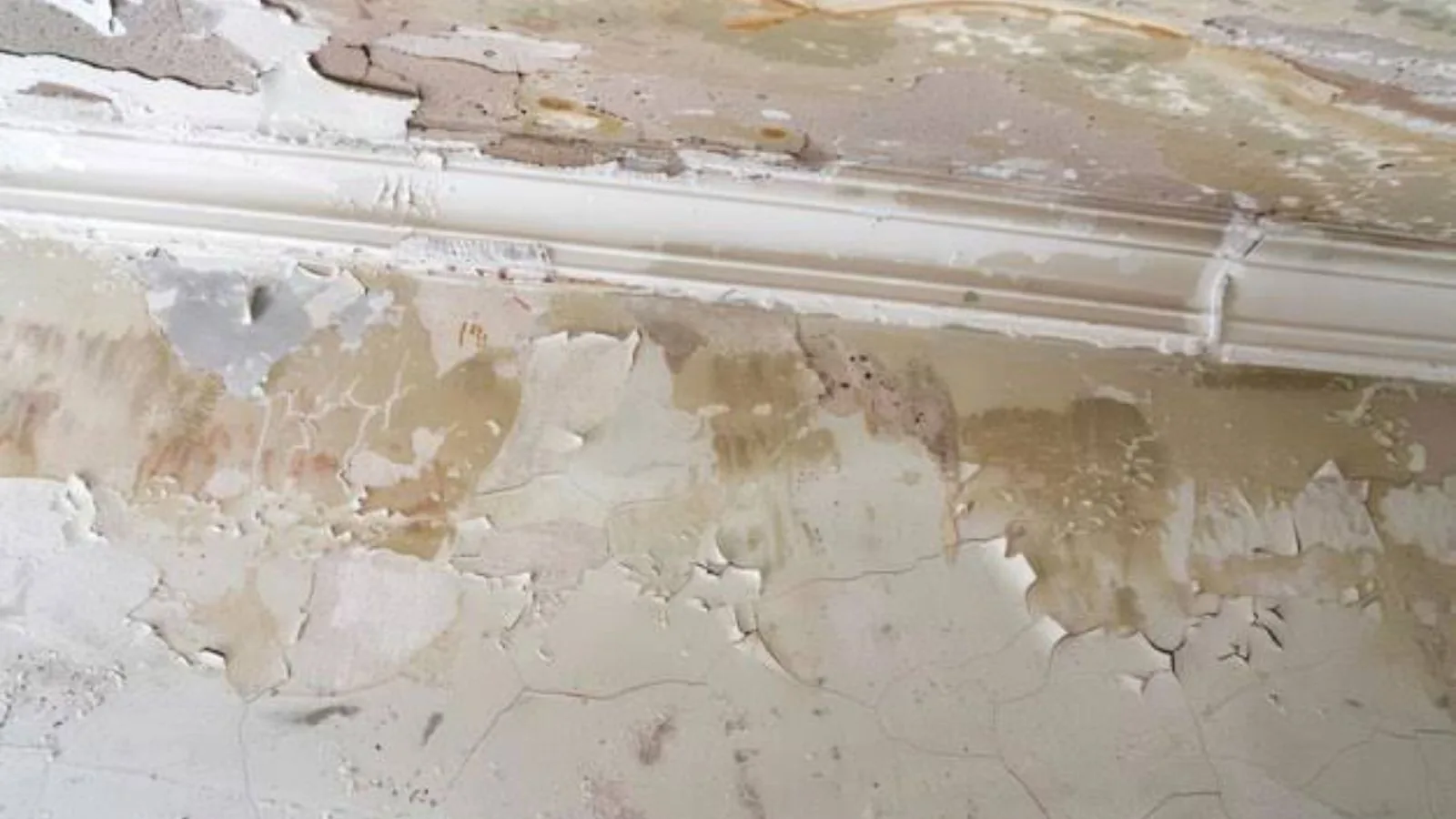
Telling old water damage from new matters more than most people expect. New damage from a sudden event is often covered by insurance and responds well to drying. Old damage that has been there for months may be excluded, may involve rot and often needs more than drying.
This guide lists the signs that point to each, in plain terms. It cannot give an exact date, but it can help you decide what to do next and what to tell a professional or an adjuster.
Signs of recent water damage
- Dark, wet stains that are spreading or still damp to the touch.
- Dripping, sagging or bubbling drywall.
- Fresh water on floors, walls or ceilings.
- Paint peeling at the edges while the surface is still wet.
- No visible mold yet, or only light spotting.
Recent damage is the best case. Drying equipment can stop it from becoming something worse, and insurance is more likely to respond if the cause was sudden.
Signs of old or repeated water damage
| Sign | What it suggests | Why it matters |
|---|---|---|
| Brown stains with rings. | Repeated wetting and drying. | The leak has come and gone over time. |
| Dark, soft or crumbling drywall. | Long-term moisture. | Material is damaged beyond drying. |
| Wood that is dark, soft or crumbles. | Rot from prolonged wetness. | Structural concern and repair needed. |
| Rusty nails or screws near a stain. | Water has been present for a while. | Hidden damage is likely. |
| White crusty deposits on masonry. | Water moving through concrete or block. | A long-term moisture path. |
| Persistent musty smell. | Hidden mold or damp. | Needs inspection. |
One sign alone is not proof. A stain that looks old may sit on a wall that is wet right now, and a clean wall may hide new damage. Moisture readings settle the question.
Not sure how old the damage is? Call for a moisture reading.
☎ Call (762) 763-0011Why age matters for repairs
New damage is often handled by drying in place. Old damage often needs removal. Soft drywall, rotted wood and moldy insulation cannot be dried back to health. They have to be cut out and replaced.
If the damage is old, find the cause first. A leak that keeps feeding the wall will ruin the repair. The wall page and the ceiling page explain what the work looks like once the source is fixed.
Why age matters for claims
Insurers draw a line between sudden damage and long-term damage. A leak that appears suddenly is covered more often than one that has been going for months. If evidence shows the damage is old, the insurer may call it maintenance or seepage.
Do not guess about age to your insurer. Describe what you saw and when. The Georgia insurance commissioner's office advises documenting the loss and keeping damaged items for the adjuster. The moisture log from a crew gives a neutral record of current conditions.
Dalton homes: where old damage hides
In older districts such as McCarty Subdivision and Thornton Avenue-Murray Hill, as in any house, slow leaks can hide inside wall and floor cavities. Rooms over crawl spaces, closets on exterior walls and ceilings under roofs are the usual spots to check.
Newer homes in Varnell and Cohutta have their own hidden places, such as slab leaks and dishwasher lines. If you are buying a house in the area, ask for a moisture inspection and photos of any past repairs.
What to do next
- Photograph everything and note the date.
- Use a moisture meter, or ask a professional to take readings.
- Find and stop the source.
- Decide whether the damage can be dried or has to be removed.
- Talk to your insurer about what you found, and describe it honestly.
A simple field check you can do
- Touch the area with the back of your hand. Cool and damp suggests moisture now.
- Press gently on the drywall. Soft spots suggest long-term wetness.
- Look for a ring pattern. Multiple rings suggest repeated wetting.
- Check the attic or crawl space above or below the stain for the source.
- Take photos with a coin or tape measure for scale and note the date.
This check is not a diagnosis. It helps you describe the problem to a professional and to your insurer. A moisture meter gives a number, and a thermal camera can show wet areas behind surfaces.
Do not poke large holes or scrub heavily at stained areas. If there is mold, disturbing it can spread spores. Leave deeper checks to someone with the right tools.
Buying or renting with past water damage
If you are looking at a house with signs of old water damage, ask the seller what was done. A repaired leak with a receipt is much better than an unexplained stain. Ask for documents on any past claims and any contractor work.
Renters should photograph stains and soft spots on move-in and tell the landlord in writing. That record protects your deposit and makes it easier to prove what was already there.
A quick note on mold
Mold is a clue but not a clock. It can appear within days or take weeks, depending on the conditions. The mold page explains what to do once it appears, and the EPA window of 24 to 48 hours explains why speed matters.
A musty smell with no visible source often points to an old wet spot. Do not ignore it. A short inspection saves a long repair.
What to do first
- Find and stop the moisture source before anything else.
- Do not use a household vacuum or fan to chase wet or moldy spots, because that spreads material through the home.
- Take dated photos of anything affected and keep them with your records.
For drying timing, the EPA guidelines on mold and moisture say wet materials should be dried within 24 to 48 hours. For claims, the Georgia Office of Insurance and Safety Fire Commissioner publishes plain-language consumer guidelines.
Questions readers ask
Can you tell how old a water stain is?
Not exactly. Rings, color and texture give clues, and moisture readings tell you whether the area is wet now.
Is old water damage covered by insurance?
Often not. Long-term seepage is a common exclusion, so ask your insurer.
Does mold mean the damage is old?
Not always. Mold can start within days. It does suggest that materials stayed wet for some time.
Can old damage still be dried?
Sometimes. Soft or rotted material usually has to be removed.
What should I check when buying a Dalton house?
Ask for a moisture inspection and look for stains, soft spots and musty smells in bathrooms, kitchens and crawl spaces.
Who decides the cause of a stain?
A plumber, roofer or inspector can identify the source, and a restoration crew can document moisture.