
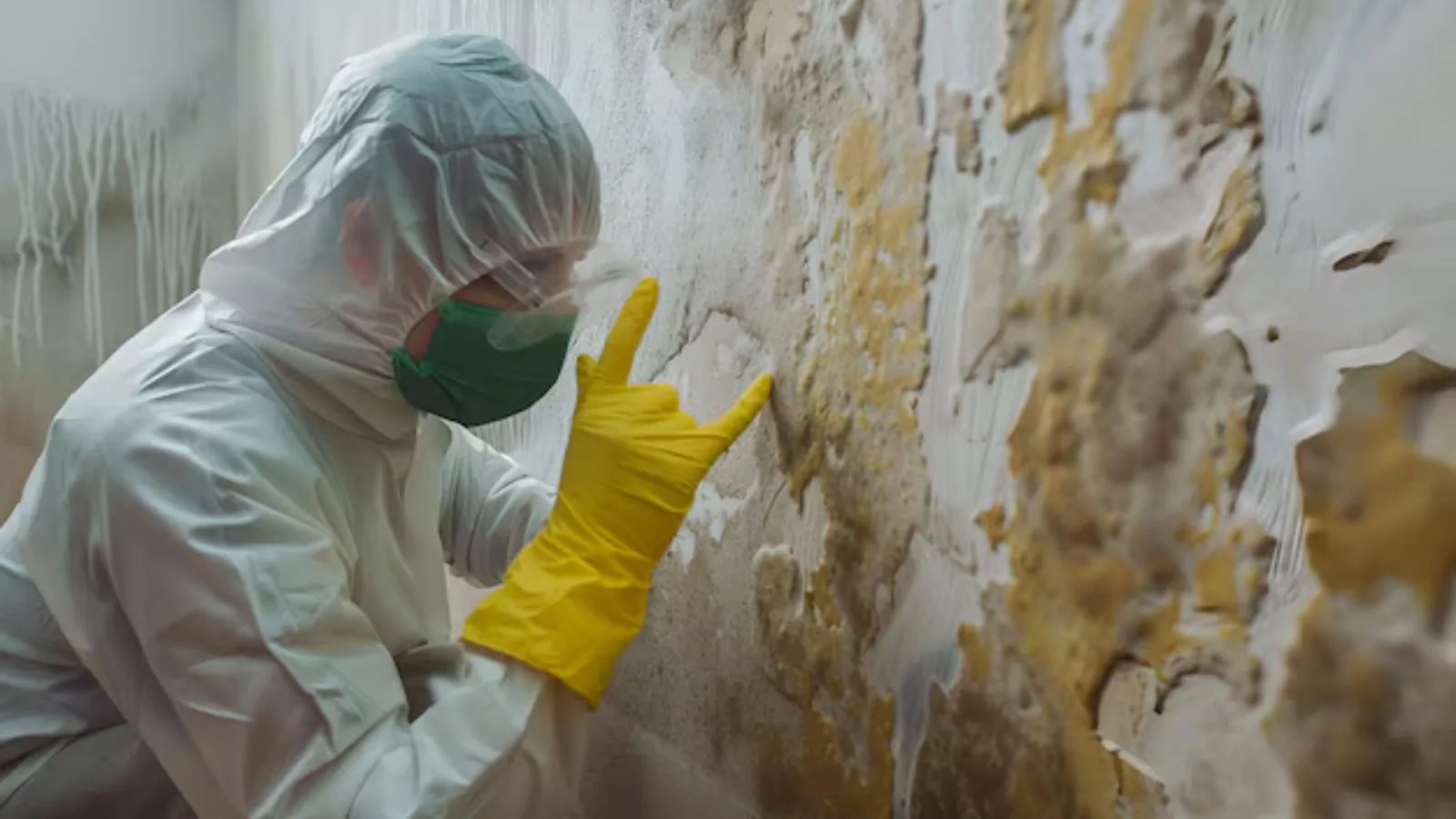
Mold clearance testing is a check after cleanup that compares the treated area with an unaffected area or with outdoor air. Buyers, lenders and property managers sometimes ask for it so they have a neutral record. In Dalton, the question comes up when a sale or refinance is underway and a water leak or mold history appears in an inspection.
This guide explains what clearance testing is and who should do it. It also covers what the EPA says about sampling and how to use the result in a sale or a loan.
What clearance testing is
Remediation removes mold and the materials it grew on, then dries the area. Clearance testing is a separate step that checks whether the area is clean. A tester takes air samples or surface samples, sends them to a lab and compares the results with a reference point.
The reference point is usually outdoor air or an untouched room. The goal is for the treated area to look like normal conditions, not zero spores. Spores are always present, so a clean result means comparable, not absent.
What the EPA says about testing
The EPA states that in most cases, if visible mold growth is present, sampling is unnecessary. It also notes there are no federal mold limits, so a sample cannot tell you whether you meet a government standard. Surface sampling may help confirm that an area was adequately cleaned.
That means clearance testing is a tool, not a legal requirement. Use it when someone needs documentation, when the cause was unclear or when you want proof the work was effective.
| Situation | Testing useful? | Why |
|---|---|---|
| Visible mold, source known, cleanup complete. | Optional. | Visual inspection and moisture readings may be enough. |
| Buyer or lender requests proof. | Yes. | Neutral documentation is the goal. |
| Musty smell, no visible growth. | Sometimes. | Helps locate hidden growth. |
| After large-scale remediation. | Often. | Confirms effectiveness. |
Need clean paperwork for a sale or loan? Call to talk about scope and documentation.
☎ Call (762) 763-0011Who should do the testing
Ask for a third-party tester, one that is not the remediation company. Independence matters because the tester has no financial interest in the result. It also gives a lender or buyer more confidence.
Ask how many samples will be taken and where. Ask what lab is used and whether the report states the method. Check credentials with a recognized body and ask for a sample report before you hire.
Using the result in a sale
- Keep all documents: the inspection, the scope, photos, moisture readings and the clearance report.
- Give the documents to your real estate agent for disclosure.
- Ask your agent or attorney what you must disclose. Rules about known defects vary, and a professional can advise.
- Share the clearance result with the buyer's inspector if asked.
- Keep copies for your records after closing.
A documented fix is much easier to explain than an unexplained stain. Buyers tend to respond better to a clear record than to silence.
Using the result in a loan
Lenders and appraisers may raise a concern if an inspection flags mold or water damage. The usual response is documentation: a remediation scope, a clearance report and proof that the cause was fixed.
Ask the lender what they need and in what form. If the lender has its own list, give it to the remediation company at the start so the right records are produced. The mold remediation page explains what a complete job includes.
Dalton and the nearby towns
Moisture can gather in crawl spaces, basements and under slabs. An inspector for a buyer may note stains in any of those places, including in older districts such as McCarty Subdivision and Thornton Avenue-Murray Hill. That is where clearance testing comes up.
If you are buying in Rocky Face or Chatsworth, ask for any past water damage records and inspection reports. A seller who has them ready makes the process smoother. For the leak itself, the crawl space page describes the typical repair.
What a clearance report should include
- The date, the location and the sampling method.
- The number and place of samples, including an outdoor or reference sample.
- The lab name and the results in plain figures.
- A statement of how the results compare with the reference.
- The tester's qualifications and contact details.
- Photos of the work area at the time of sampling.
If a report leaves these out, ask for a corrected version. A report that is hard to read is hard to use in a sale or a loan.
Keep the report with the remediation scope and the moisture log. Together they tell the whole story of the problem and the fix.
Timing the test
Testing too early can give a false result if dust from the work is still in the air. Most testers wait until the work is done, the containment is down and the area is dry. Ask the remediation company when the area will be ready.
Plan the schedule around the closing or the loan deadline. Remediation, drying and a lab turnaround can take more than a week in total, and a rushed test can cost you time if it fails.
What clearance does not tell you
- It does not predict future growth if moisture returns.
- It does not name a health risk, which belongs to a physician.
- It does not replace a moisture inspection.
- It is a snapshot of one day.
Keep humidity under control after the work. The EPA suggests staying below 60 percent, and ideally between 30 and 50 percent.
What to do first
- Find and stop the moisture source before anything else.
- Do not use a household vacuum or fan to chase wet or moldy spots, because that spreads material through the home.
- Take dated photos of anything affected and keep them with your records.
For drying timing, the EPA guidelines on mold and moisture say wet materials should be dried within 24 to 48 hours. For claims, the Georgia Office of Insurance and Safety Fire Commissioner publishes plain-language consumer guidelines.
Questions readers ask
Is clearance testing required to sell a house?
No general rule requires it. A buyer or lender may ask for it, and documentation helps either way.
Who pays for clearance testing?
It depends on the contract. Ask who is responsible before the work begins.
Can the remediation company do the test?
It can, but a third-party tester gives a more independent result.
What does a passing result mean?
Usually that the treated area is comparable to a reference area. It does not mean zero spores.
What if the test fails?
The area is cleaned again, the cause is checked and a new test is taken.
How long does it take?
Sampling is quick, and lab results often come back in a few days.