
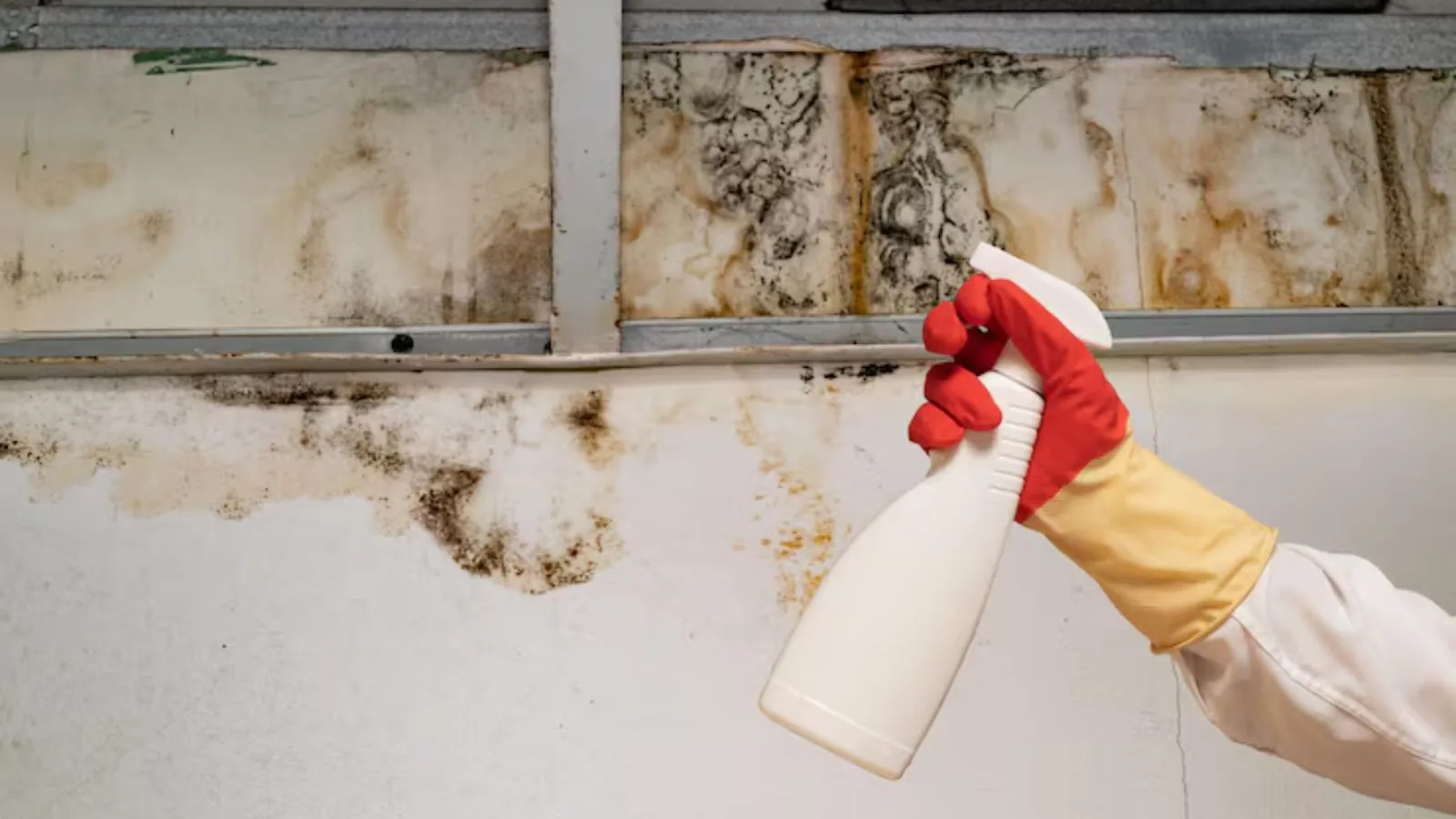
People in Dalton use the words mold and mildew almost interchangeably, and the difference is worth knowing. Mildew is a term for certain molds that tend to grow flat on surfaces. Mold is the broader category, and it can grow into materials, not just on them.
This guide explains how to tell them apart, why both appear in a humid climate and what each calls for. The EPA treats both as moisture problems, and the fix starts with the water.
Mold and mildew side by side
| Feature | Mildew | Mold |
|---|---|---|
| Usual look. | Flat, powdery or downy, often white or gray. | Fuzzy, slimy or spotted, in many colors. |
| Where it grows. | On surfaces such as shower tile, windowsills and fabric. | On and into drywall, wood, insulation and carpet. |
| How deep it goes. | Mostly the surface. | Can penetrate porous materials. |
| Cleaning. | Often wipes off with detergent and water. | Porous materials may need removal. |
| Smell. | Musty. | Musty and often stronger. |
The terms overlap, and a lab can name a growth precisely. For daily life, what matters is whether the growth is on a hard surface you can clean or inside a material you cannot.
How the EPA frames it
The EPA does not treat mildew as separate from mold. The key point it makes is moisture control. If you clean a growth without fixing the water problem, it will likely return.
The agency also says molds come in many colors and that color does not tell you the type. A white powder, a green fuzz and a black spot can each be a mold. If you are unsure, treat the cause, not the color.
Not sure if it is mold or mildew? Call and describe what you see.
☎ Call (762) 763-0011Cleaning mildew on hard surfaces
- Wear gloves and eye protection.
- Scrub with detergent and water. Rinse and dry the surface.
- Fix the humidity or leak that caused it.
- Improve airflow with a fan, an exhaust vent or a dehumidifier.
- Check the spot in a week to see if it returns.
Surface growth on tile, glass and sealed wood can often be cleaned by hand. The EPA says the area under about 10 square feet can usually be handled by the homeowner.
When it is more than mildew
- The growth is on drywall, ceiling tile or carpet.
- The material is soft or stained underneath.
- The smell is strong and the spots come back.
- The area is larger than about 10 square feet.
- Water damage came before the growth.
Those signs point to mold that has taken hold in a porous material. The mold remediation page explains containment and removal. For wall problems, see wall repair.
Why Dalton gets both
Dalton summers are warm and humid, and winters bring condensation on cold windows. Bathrooms, kitchens and laundry rooms see steam that lingers. Basements and crawl spaces hold humidity for weeks.
That mix feeds mildew on shower tile and window frames and mold in damp walls and closets. Homes in Tunnel Hill and Cohutta with older windows or crawl spaces often see it first at the edges of rooms.
Keeping both away
- Run bath fans during and after showers, venting outside.
- Keep indoor humidity below 60 percent, ideally 30 to 50 percent.
- Fix leaks quickly and dry wet areas within 24 to 48 hours.
- Clean gutters and slope soil away from the foundation.
- Leave space between furniture and exterior walls.
A humidity meter is cheap and tells you what a room is doing. If readings stay high, a dehumidifier is the simplest fix.
Where each shows up in a Dalton house
| Room | Likely growth | What helps |
|---|---|---|
| Shower and tub. | Mildew on grout and caulk. | Ventilate, squeegee and keep caulk sound. |
| Window frames. | Mildew from condensation. | Wipe, then improve airflow and lower humidity. |
| Closet on exterior wall. | Mold on the wall behind clothes. | Add airflow and check for leaks. |
| Basement or crawl space. | Mold on wood and insulation. | Dehumidify and fix drainage. |
| Under the sink. | Mold on cabinet boards. | Fix the leak and dry the base. |
Seeing which room the growth is in helps you guess the cause. A bathroom suggests steam, and a closet suggests still air and a cold wall. A cabinet suggests a plumbing leak.
Treat the cause first, then the growth. A wiped shower that still stays wet for hours will grow mildew again within weeks.
Fabrics, books and belongings
Mildew likes fabric, leather, paper and cardboard. Clothes in a damp closet, books in a basement and shoes in a garage are classic targets. Wash or wipe items, let them dry fully in sunshine and moving air, and store them dry.
Items with deep growth or a lasting smell may not be worth saving. Valuable pieces such as photographs and documents can be handled by a specialist. Keep a record of what was lost if there is an insurance angle.
When a professional should look
If you are unsure whether you have surface mildew or mold in a wall, a moisture inspection can tell. A meter reading is quick and it shows whether the material is wet.
If the growth followed a leak, the structural drying page explains why drying must come before cleanup. A wet wall that is cleaned and closed will grow again.
What to do first
- Find and stop the moisture source before anything else.
- Do not use a household vacuum or fan to chase wet or moldy spots, because that spreads material through the home.
- Take dated photos of anything affected and keep them with your records.
For drying timing, the EPA guidelines on mold and moisture say wet materials should be dried within 24 to 48 hours. For claims, the Georgia Office of Insurance and Safety Fire Commissioner publishes plain-language consumer guidelines.
Questions readers ask
Is mildew less dangerous than mold?
Mildew is a type of mold, and health effects vary by person. Ask a physician about any health concerns.
Can I clean mildew with vinegar or bleach?
Detergent and water work for surface growth. The EPA does not recommend bleach as a routine practice in mold cleanup.
Why does mildew come back in my shower?
Because the surface stays damp. Better ventilation and drying the shower after use help.
How do I tell mold from dirt?
Dirt usually wipes off and stays gone. Mold often returns, smells musty and appears in damp areas.
Do I need a test?
Usually not. The EPA says that if visible growth is present, sampling is unnecessary in most cases.
When is it more than a DIY job?
When growth covers more than about 10 square feet, when it is on drywall or when water damage came first.